New Medieval Art

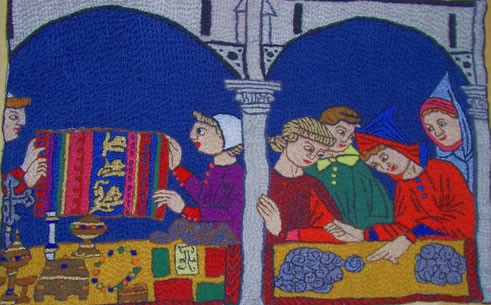
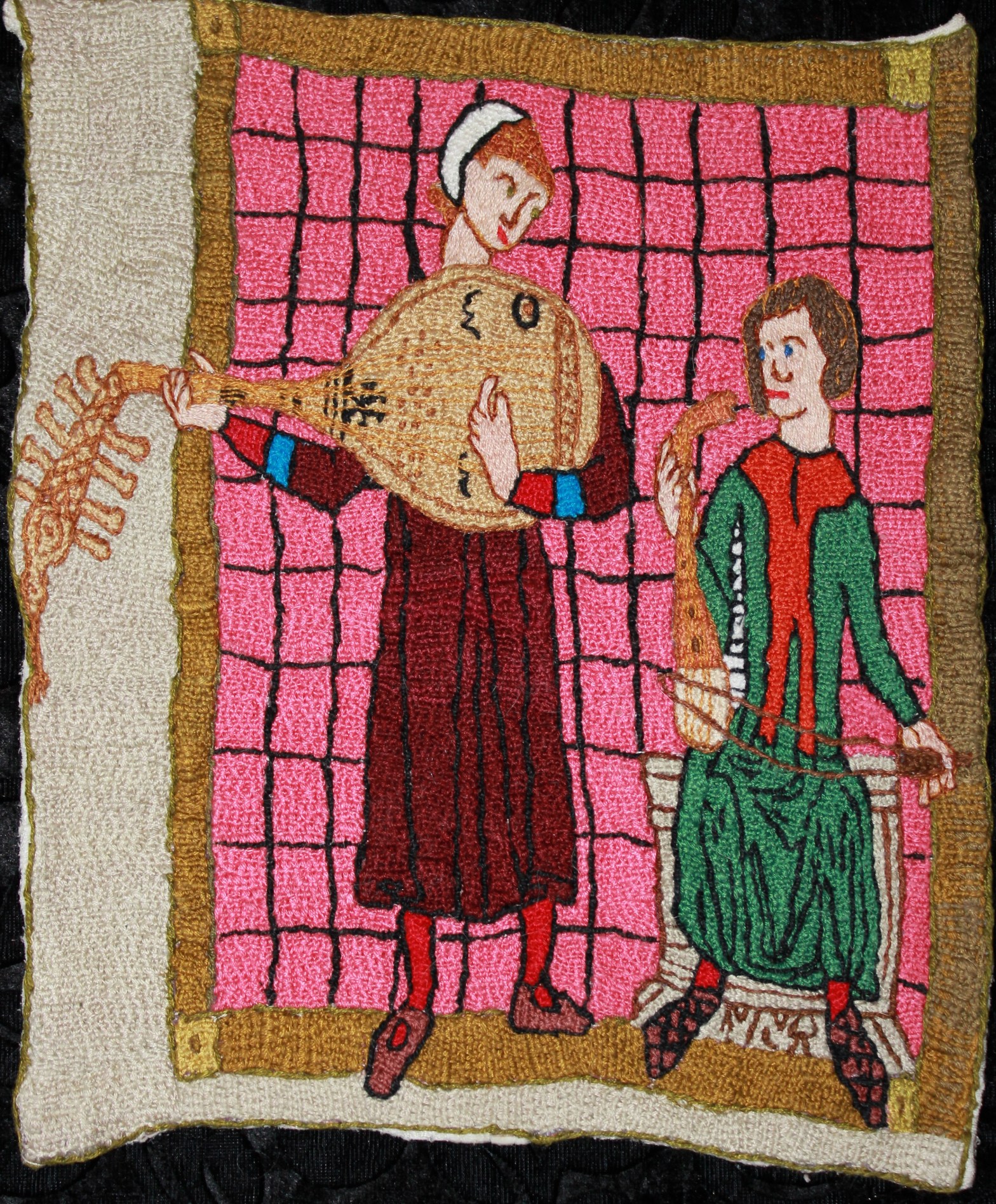
New artistic mediums based on artwork from Medieval sources.

You are currently browsing the Art category.

New Medieval Manuscripts links added

Hello,

Please check out the two links I have added that have digitized medieval manuscripts on them.  I believe one site is new; Catalogue of Digitized Medieval Manuscripts, and one has been around for a while: The Digital Scriptorium. They are both fantastic sources, and what is nice, is that there is documentation of where to find these manuscripts.  Again, please share any time you have visited a special collection and seen a medieval manuscript.  What were your thoughts?  What did you see? What impressed you most?

I am still looking for other artists to share their work on this blog.  If you know any artists that have created new work from medieval manuscripts, please send my blog to them in the chance that they might want to talk about their work here.

Julie

Posted 1 year, 6 months ago at 3:51 am.

Add a comment

More about stitches in Cantigas patches

Hi all,

For those of you that are curious, you may notice that the faces and hands of the people in the patches are not rippled, as with the Laid stitch.  That is because I use the Split stitch to create more realistic-looking faces and hands. I did try a couple of stitches with Laid stitch on the faces, and found them to look distorted. I also learned that in order for the faces and hands to look better, I had to go to one strand or two, not the typical 3 strands that I use throughout the rest of the patch.  Anything that needs great detail requires less strands.  I also use the Stem stitch to outline the images, and to help me give the picture more structure before I fill in the areas with color.  Many of the images I have ironed on have come out smeared or not clear, so outlining the entire picture first, has helped me keep the picture more true.  I don’t like to waste material or transfer paper, or ink, so when a picture isn’t as clear as I’d like it, I outline it to see if I can still use it, before I trash it and start over.

Please ask questions and send me ideas of other art mediums to talk about.  On this blog, I welcome you to teach others what you know and what you love in the medieval art/history realm.

Julie

Posted 1 year, 7 months ago at 8:29 pm.

Add a comment

Choice of colors in Laid Work

Hello blog friends,

I thought I might want to explain how I came about using the colors that I do in the embroidery patches.  First of all, many of the first images I saw of the Cantigas miniatures were in black and white.  Later, I found some pictures that looked as if the background colors were pink or light blue.  As more authors researching this manuscript actually traveled to Spain and purchased recent photos of the images, I could begin to understand that the pink was actually faded red, and that most of the blue backgrounds were a darker blue.  No matter, my project had begun and I have chosen a bright pink back ground for the paled red images, and a light blue background for the blue ones.  It works out nice as with a lighter background the bolder colors stand out quite well.  I have further ventured to add more color in the images, as it seems that the majority of the images in the Cantigas miniatures were mainly red and blue, with some black and white.  I decided that if the artists back then had a multitude of colors to choose from, such as I do today, they would have used them.  Thus, I use a splendid variety of colors that often do not mimic the absolute color truth from the originals. 

Please comment if you are compelled to.

Happy New Year!

Julie

Posted 1 year, 8 months ago at 4:58 am.

Add a comment

Laid Work

I applied Laid Work to the images from Las Cantigas de Santa Maria. This embroidery technique was used in the eleventh century art piece known as The Bayeux Tapestry. It isn’t really a tapestry as it isn’t woven. It is actually embroidered work by several workers, who created the images to show the story of the Battle of Hastings of 1066. When looking at the Laid Work from the Bayeux, it is clear that the artists were in a big hurry, as their stitches are wide and not even. Some scholars say that the tapestry was commissioned or ordered by William the Conqueror or his brother, Bishop Odo.

The Laid stitch is simply a satin stitch with spaced-out threads laid vertically to the satin stitch, and couched down. This gives a rippling effect over the entire image. It also strengthens the area, so in many cases in this time period, this stitch was also used to develop patches. These beautiful patches would be applied to clothing, outlive the clothing, and be removed and reattached to new cloths. My stitches are significantly more even and tight than those found in the Bayeux Tapestry as I didn’t have a king demanding that my work be turned out by a certain deadline.

I displayed the embroidered patches from the Cantigas in an exhibit in the Norlin Library at the University of Colorado-Boulder.  The comments were quite encouraging, as the campus community shared their amazement of the images from such an old piece of history, as well as the beautiful embroidered stitches that allowed them to be hung in a display.  The comments also related their desire to see more art work from our history, and enjoyed knowing how these artistic skills can be learned and the local organizations and guilds that are around to provide assistance in learning them.

Posted 1 year, 9 months ago at 3:53 am.

Add a comment